What Leading Leaders Taught Me About Brand and Belief
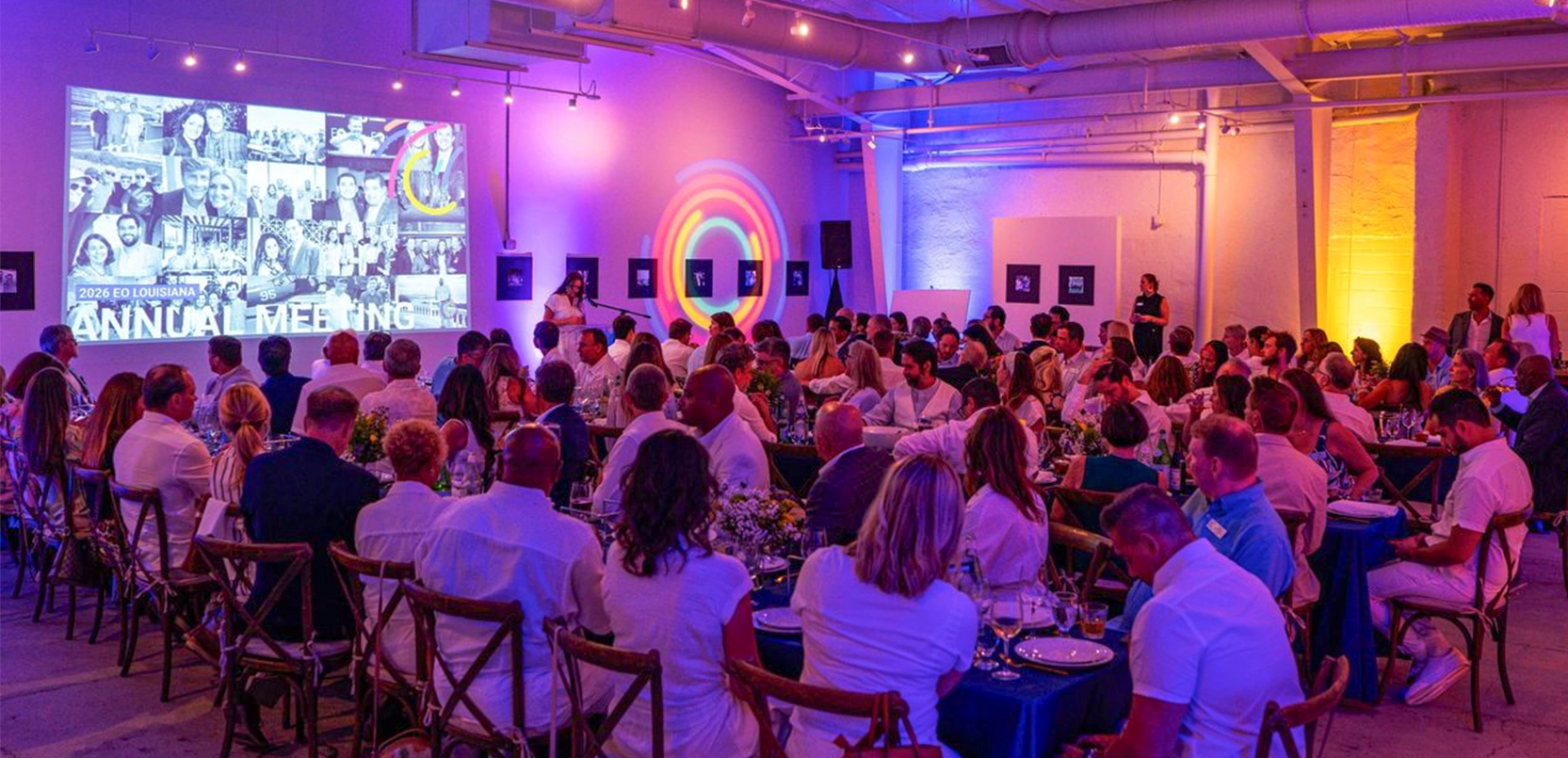
This past weekend, I stood in a packed room of entrepreneurs at EO Louisiana’s Annual Meeting and watched months of ideas, planning and contributions come together.
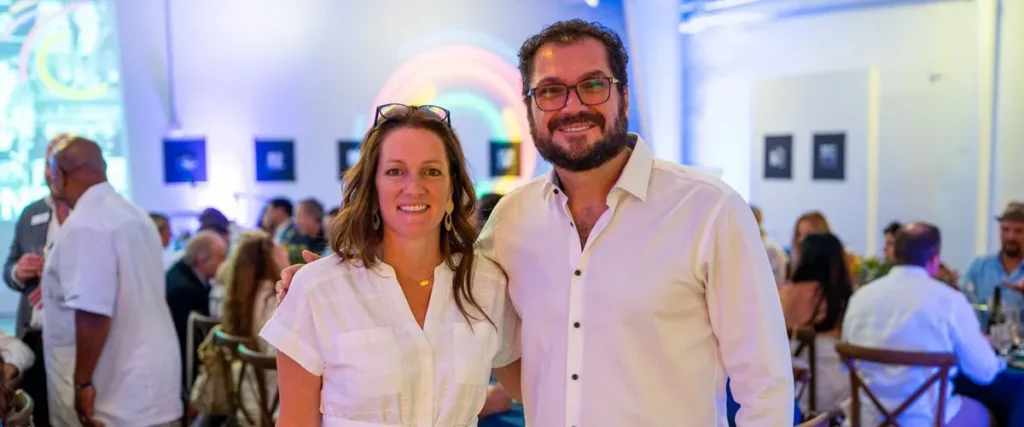
More than 60 photographs filled the space, capturing nearly every member of our chapter at an EO experience somewhere along the way. People stopped, smiled, shared stories and remembered. The attire was inspired by New Orleans’ White Linen Night, giving the evening the feel of a gallery gathering, but the idea underneath it had been taking shape much longer.
This year, I challenged our board to lead with greater intentionality. To make the things we do worth doing, make the time we spend together worth it, and make it matter.
The Annual Meeting became one expression of that challenge. Our board, committee leaders and many outside influences brought it to life in ways no one person could have. By the end of the night, what stayed with me wasn’t the production. It was the people.
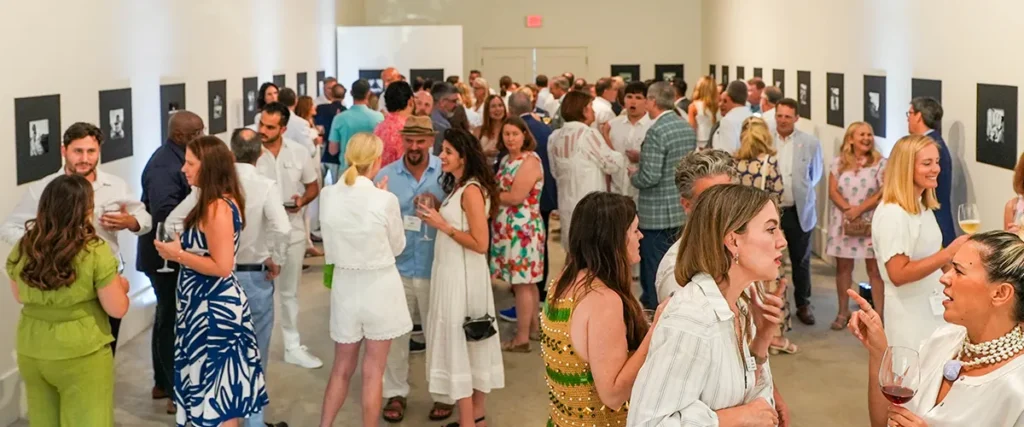
I looked around at business owners who genuinely care about one another. People who have worked through difficult times together, celebrated wins together and would go to bat for each other when it mattered most. That’s what I hoped people would feel that night – seen, connected, supported and part of something bigger than themselves.
The experience also brought into focus one of the biggest lessons I’ve learned during two years as chapter president:
Leading inside a brand teaches you something very different from building one from the outside.
Leading leaders takes away the shortcuts
Leading entrepreneurs is an unusual assignment. Everyone around the board table is already a leader, with companies, employees, customers and enormous demands on their time. And they’re volunteers.
There isn’t much traditional authority to lean on. You can’t assume something will happen simply because the president asked for it. People have to believe the work matters enough to contribute their time and energy to it.
Early in my career, long before becoming EO president, I thought leadership was about directing traffic and delegating work. Today, I’ve learned it is much more about connection and having a clear enough point of view about where you’re going that other people want to help you get there.
That doesn’t mean everyone agrees. We’ve had hard conversations and different opinions, but some of our most productive conversations have been the difficult ones. When approached with honesty and respect, they strengthened relationships instead of weakening them. That taught me something I wasn’t expecting.
Leading with authority results in compliance. Leading with influence requires belief.
From a distance, those two things can look remarkably similar. That distinction changed how I think about leadership, and validated how I think about brands.
Experiencing brand from the inside
For 25 years, I’ve helped organizations define their brands. Through our strategy work at Brew, we help leadership teams clarify what they believe, what they stand for, who they serve and how those decisions should guide the organization.
EO gave me a different vantage point. Instead of advising from the outside, I became one of many local leaders responsible for carrying a much larger global brand from the inside.
That’s an incredibly interesting challenge.
Many companies struggle to get five executives sitting in the same building to explain what their organization stands for in the same way. A global organization like EO has to do that across different countries, cultures, and leadership styles, and then give local leaders substantial freedom over what happens in their own communities.
You cannot manage that with a script or a brand standards guide.
What I’ve observed instead is simpler and, I think, more important:
The values at the center are the cornerstone and must never waver. How those values are expressed can change to fit the local culture.
Shared meaning matters more than sameness
Brand people (including us) talk a lot about consistency, and rightly so. Identity matters. Language matters. Standards matter. But consistency can sometimes become a pursuit of sameness.
Those aren’t the same thing.
Sameness means everyone does it the same way. Shared meaning means everyone understands what must stay true.
EO Louisiana doesn’t need to look exactly like another EO chapter somewhere else in the world. Our events can feel like Louisiana. Our board can develop processes that work for our chapter. Our Annual Meeting can include an art gallery filled with photographs of our members and a family-style dinner.
Those decisions are ours to make.
What isn’t ours to reinvent are the beliefs at the center of the organization.
EO reinforces those through training, playbooks, leadership development, strategic priorities and, perhaps most importantly, the experience of being a member. Then local leaders are trusted to interpret those beliefs in ways that are meaningful to their own communities.
That’s one of the most important lessons I’ve taken from learning how a global brand operates:
The goal isn’t to create people who can repeat your words. It’s to inspire people who understand your beliefs well enough to make the right decisions for the brand without you.
Vision has to move through people
I’ve watched that happen from the global level down. Global leadership establishes direction and strategic priorities. Regional and chapter leaders then interpret that direction within their own communities.
When Joaquín “Quini” Cordero of EO Guatemala served as Global Chair, one of his messages and challenges to the organization was simple: Do hard things.
What interested me wasn’t just the phrase. It was watching the idea take hold. Leaders interpreted it. Chapters made it relevant. Members connected it to their own challenges.
The message wasn’t merely repeated. It was adopted.
That’s an important distinction for any leader trying to create alignment. A vision doesn’t scale because the person at the top communicates it well once. It scales when other people understand and believe it deeply enough to carry it forward themselves.
The more I’ve watched EO operate, the more I believe its strength isn’t simply a communications accomplishment.
It’s a belief accomplishment.
The expressions may differ, but there is remarkable consistency in what members and leaders believe the organization means. A volunteer organization could not sustain itself at this scale through instructions alone.
People may join for the proposition. They stay for something deeper.
Last year, I was at a dinner with some of our longest-tenured EO members. They were people who had been part of the organization for ten, fifteen, even twenty years.
Someone asked the table: Why are you still here?
Nobody talked about revenue or business tactics. They talked about people, friendships, relationships, experiences and moments.
I’ve thought about that conversation a lot since.
Most organizations are very good at explaining why someone should join, buy, work there or choose them. That’s the proposition. But the reason people arrive isn’t always the reason they stay.
EO provides tremendous tangible value. The programming, training and global network have all influenced me personally and professionally. But underneath those benefits is something much harder to put into a brochure – a sense of belonging. Being around people who understand the unique challenges of entrepreneurship. Knowing there are people who will be in your corner when things get difficult.
Maybe the proposition gets someone into the room. The experience makes the room matter.
That’s a brand lesson too. We spend enormous amounts of time defining what an organization does, why it’s different and what it promises. Those questions matter. But there is another one worth asking:
What does it feel like to experience said brand?
A tagline can answer that, but people have to experience the answer for it to take hold.
Leadership became less about doing
My second year as EO president has felt very different from my first.
The first year was new and intimidating, and I wanted to get it right. I probably did more than I needed to because I was still learning where my role ended and someone else’s began.
This year, I’ve learned to trust the board more fully.
Our Learning Chair, Christa Cotton, CEO of El Guapo, is a great example. Her attentiveness to individual members and the details of their experience contributed enormously to the Annual Meeting. Others influenced the ideas and perspective. The result became better because it didn’t belong to one person.
That has become another important leadership lesson for me. A leader doesn’t have to create every outcome. The work is to create clarity around what matters, bring together capable people who care about it, and give them enough room to shape the result.
For the Annual Meeting, the intention was relatively simple. We wanted people to feel seen, so nearly every member found themselves somewhere on the walls of our gallery. We wanted connection, so the photographs gave people reasons to stop, talk and remember. We wanted to reinforce the feeling that each person was part of something larger, so individual moments became part of the chapter’s collective story.
The strategy didn’t need to be explained in the room.
People could experience it.
Brand is a leadership tool before it’s a marketing tool
This is the lesson I’ll continue to carry.
A brand isn’t simply something an organization communicates. It’s something leaders can use to create a shared center of gravity – to help people understand what belongs, what doesn’t and how to make decisions when there isn’t a rule for every circumstance.
Eventually, every growing organization reaches the edge of a leader’s direct control. The founder can’t be everywhere. The CEO can’t approve everything. Marketing can’t police every conversation.
So what happens when you’re no longer in the room?
Do people simply know the rules, or do they understand the organization well enough to make decisions in its spirit?
Those are different levels of alignment. Increasingly, I believe that’s one of the places where strong brands distinguish themselves.
When the leader leaves the room
At the end of our Annual Meeting, I saw more than a successful event.
I saw a global organization expressed in a distinctly Louisiana way without losing what made it EO. I saw people contributing their time and talent because they cared about the experience of the members around them. I saw photographs turning into conversations and memories, and people who had been through difficult seasons together enjoying what they had built together.
Most importantly, I saw a room full of leaders who had chosen to be there.
Nobody had to come. Nobody had to serve. Nobody had to give their time. They wanted to.
Maybe that’s one of the purest tests of leadership and one of the purest tests of brand:
When the authority disappears, the script ends and the leader leaves the room, does the belief remain?
The strongest organizations make sure it does.